

Sign up for free to receive our blogs, regulatory alerts, and monthly updates
Sign upASIC’s Focus on Complex Trading Products Expands Beyond Contracts for Differences (CFDs)

ASIC’s latest surveillance of online brokers offering short-dated exchange traded options (ETOs), futures and fractional share trading shows that the regulator’s focus on high-risk and complex investment products now extends well beyond CFDs.
ASIC has also made a public warning to retail investors about risky products offered by online brokers and the likelihood of losing money.
While CFDs have attracted significant regulatory attention and enforcement action in recent years, ASIC’s concerns are broadening. ASIC is now casting its net wider to products that share common features, including leverage, complexity, rapid loss potential and distribution models that may expose retail investors to risks ASIC believes they do not fully understand.
For online brokers, trading platforms, digital asset (crypto) exchanges, product issuers and distributors, the key lesson is clear: ASIC is increasingly scrutinising product governance, onboarding processes, target market determinations (TMDs), client disclosures and distribution practices across a broad range of investment products.
As a leading financial services regulatory firm, we’ve helped lots of clients roll out complex derivative products, spanning from over-the-counter (OTC) CFDs and other option products, through to at-scale blockchain-driven futures and perpetuals (perps). Newer types of work include derivative, security and managed-investment scheme tokenised products (RWA tokenisation).
ASIC’s latest surveillance
ASIC’s review examined nine entities offering what it has referred to as high risk or complex products. These included ETOs, futures and fractional share trading products.
Fractional share trading products are not a class of financial products in themselves but are often structured as derivatives.
The regulator identified concerns including:
- deficiencies in TMDs;
- onboarding processes that were insufficiently tailored to client circumstances;
- onboarding questionnaires that could be repeatedly attempted until a client passed;
- inadequate disclosure of risks, costs and ownership arrangements; and
- distribution practices that may expose unsuitable investors to complex products.
Historic ASIC reviews and stop orders (including interim stop orders)
Historically, ASIC’s most visible intervention in this area involved CFDs. A significant number of ASIC stop orders relating to investment products have involved CFD issuers, although managed investment schemes and consumer credit products have also been areas of focus.
Stop orders are a blunt instrument, but they get the business’ attention. We’ve helped a lot of businesses successfully negotiate with ASIC to lift their interim stop orders. It’s stressful for the business and it’s time-critical work. Getting your TMD aligned with your PDS, Terms and Conditions and onboarding processes is worth the effort, so as to avoid a stop order. Deficiencies in TMDs were a common cause of DDO stop orders.
More recently, ASIC published REP 828, which focussed on the distribution practices of CFD issuers and identified concerns around onboarding, customer screening, TMDs and distribution controls. A summary of ASIC’s key concerns and next steps is available on its website.
In addition to stop orders, ASIC since 2019 has imposed a product intervention order on CFD issuance, including leverage limits, prohibitions on inducements, standardised margin close out and negative balance.
The historic focus on CFD issuers was part of a global regulatory action that saw similar product intervention orders imposed on CFD issuers in multiple jurisdictions. In Australia the number of issuers of CFDs has been around 60, whilst issuers of other complex products have been a handful with other products often ancillary to the CFD offering. We provide legal or compliance services to the vast majority of Australia’s CFD issuers, and run an industry forum for them.
However, a broader range of complex products are now being offered to retail investors through online platforms and mobile trading applications. As these products become more accessible, the potential impact of regulatory intervention in areas that ASIC considers high risk also increases.
ASIC’s latest surveillance suggests that the regulator’s concerns are no longer limited to CFDs as a product class. The products being reviewed now often have common characteristics such as the use of leverage, relatively short holding periods and high complexity. ASIC is therefore applying similar regulatory themes across a broader range of products.
When assessing ASIC’s likely areas of focus, we often think about products along two dimensions: risk and complexity. Neither is binary and both exist on a spectrum. As a general proposition, the riskier and more complex a product is, the greater the level of regulatory scrutiny it is likely to attract. The heat map below provides a visual representation of that continuum and can be a useful tool for issuers when assessing how ASIC may view their product.
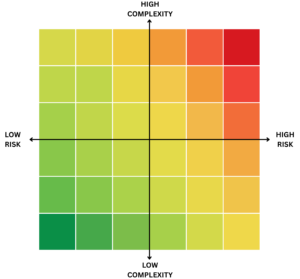
Using the concepts in the heat map above, fractional shares may be less complex than some of the other derivative structures discussed in this article, depending on their precise legal and operational structure. While certain forms of fractional shares may introduce risks that do not apply to direct ownership of the underlying asset, such as liquidity, credit or intermediary risk, the overall risk profile will also depend on the nature of the underlying investment. For example, fractional interests in established blue chip equities are likely to present a lower risk profile than fractional interests in speculative start-ups or early-stage ventures. Accordingly, fractional shares may sit at different points within the matrix depending on both the structure of the product and the characteristics of the underlying asset.
What action will ASIC take next?
The surveillance has not, at this stage, resulted in a public enforcement action against the nine entities reviewed. However, ASIC says it is continuing to address concerns with some entities and is considering further regulatory or enforcement action.
This surveillance from ASIC, along with the public warning about the risks of these products, should make it clear that this is an area of strong focus for ASIC. It is likely ASIC will continue to review the space and take enforcement action where it is not satisfied that industry behaviour has changed. It is also possible that, when the CFD product intervention order is required to be renewed, ASIC takes a similar approach to the United Kingdom’s Financial Conduct Authority and extends the range of financial products captured.
What about crypto derivatives and perpetual products (also called futures)?
A crypto perpetual contract is a margined derivative that provides long or short economic exposure to the price of a crypto asset, has no fixed expiry date and typically uses periodic funding payments to keep its price aligned with a reference spot-price index. The position remains open until it is closed or liquidated and may be settled in fiat currency, a stablecoin or another crypto asset.
Although ASIC’s latest surveillance did not specifically target crypto derivatives, the themes identified by the regulator are equally relevant to digital asset products.
ASIC’s Information Sheet 225 explains that ASIC considers that some token-related arrangements may constitute financial products under Australian law. In addition, a number of digital assets providers are now issuing novel products such as perpetual futures and perpetual swaps that are similar to traditional derivatives. Many of these products exhibit the same characteristics identified in ASIC’s surveillance.
As regulatory scrutiny of digital asset products continues to evolve, firms should assume that existing concerns regarding onboarding, TMDs and disclosure will apply. This is regardless of whether the product is a crypto derivative, crypto future, crypto option or a perpetual product such as perpetual futures, perpetual swaps and perpetual contracts. Any product that involves leveraged crypto trading or digital asset derivatives may come under scrutiny.
What should firms be doing?
Although the products reviewed were ETOs, futures and fractional share arrangements, the underlying regulatory themes apply far more broadly. Firms offering CFDs, crypto derivatives, perpetual futures, perpetual swaps and other complex products should expect ASIC to continue scrutinising onboarding practices, TMDs, distribution controls and disclosure frameworks.
Guidance published by ASIC regarding CFDs such as REP 828, and its published information relating to stop orders, is helpful in ascertaining the standards required for similar leveraged products.
The regulatory treatment of fractional shares also deserves careful consideration. Although
ASIC included fractional share trading in the surveillance of complex and high-risk products, fractional share arrangements can have very different economic purposes from CFDs, ETOs or futures. A fractional share product may be designed to give long-term investors access to otherwise expensive or difficult-to-access securities rather than to facilitate leveraged short-term speculation. The relevant regulatory question is therefore not simply whether a product is “complex”, but how it is structured, how investors are exposed to risk and how it is distributed (see an explanation below the diagram above).
It is important that issuers of these products ensure that the investor protection rules in Australia are followed. This includes compliant Product Disclosure Statements and a Financial Services Guide, and appropriate target markets and distribution in accordance with those target markets.
Once products are offered, ongoing monitoring of consumer outcomes is also important.
Although products such as ETOs and futures have different use cases to CFDs, benchmarking target markets and disclosures against existing CFD materials would be sensible.
Have any further questions?
| Contact Us | Our Expert Team | Our Training |
Author: Greg Patton (Special Counsel)